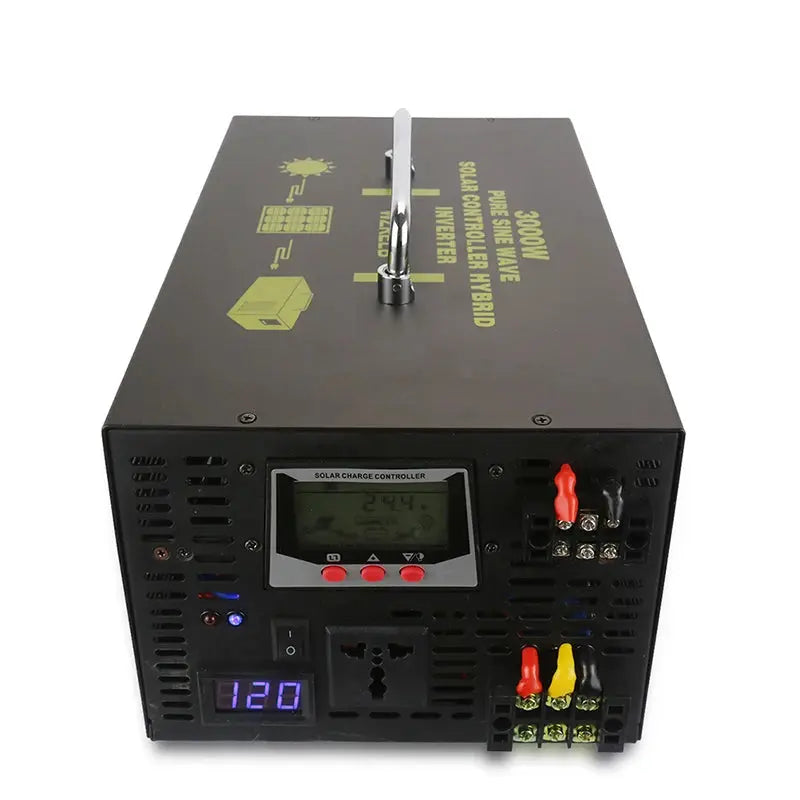
3000W Pure Sine Wave Inverter 12V/24V/48V to 110V-240V | 6000W Surge | Built-in 30A Solar Charge Controller
3000W Pure Sine Wave Inverter 12V/24V/48V to 110V-240V | 6000W Surge | Built-in 30A Solar Charge Controller
Couldn't load pickup availability
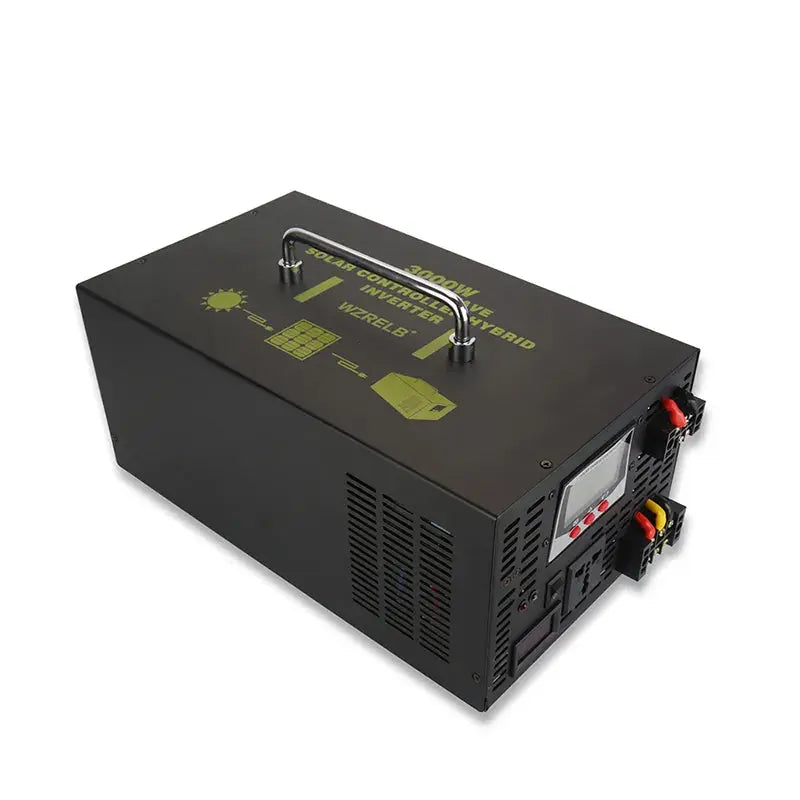
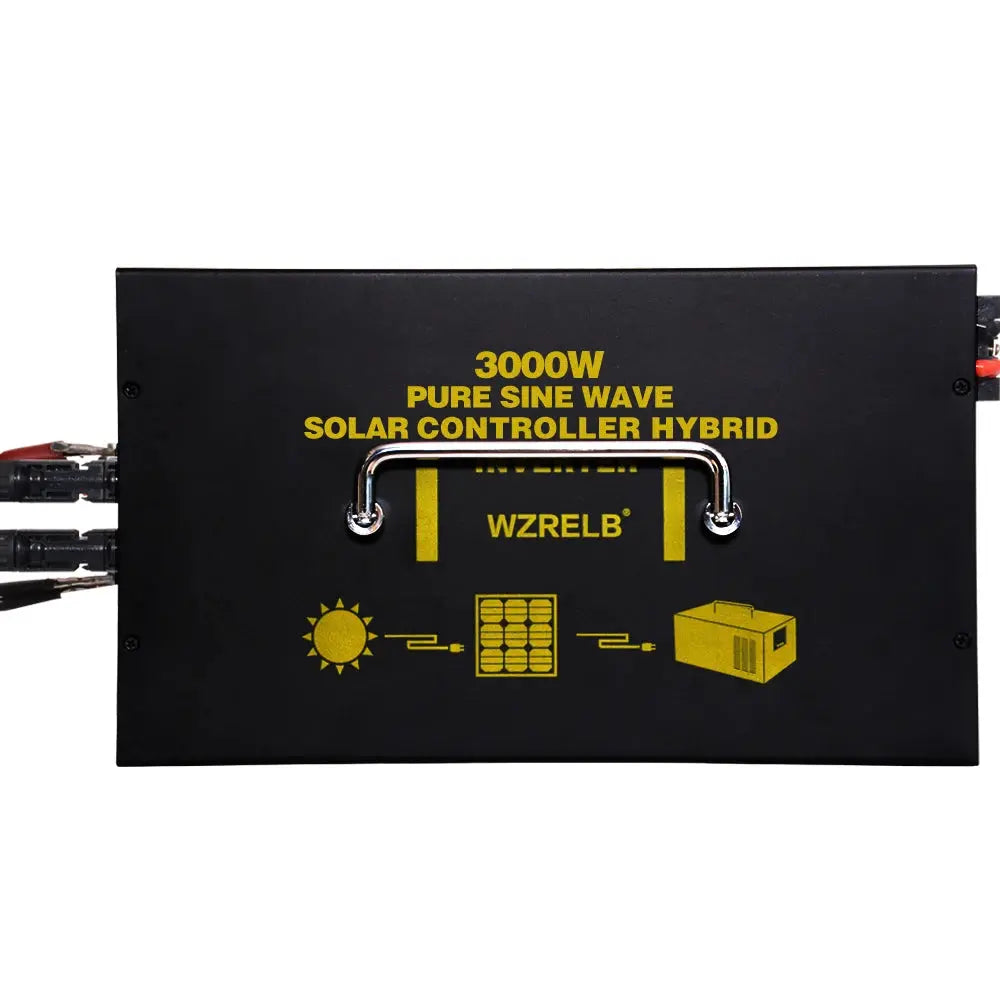
A 3000W continuous / 6000W surge pure sine wave inverter with a built-in 30A PWM solar charge controller. It converts 12V, 24V or 48V battery power into clean 110V, 120V, 220V, 230V or 240V AC — stable enough for fridges, power tools, pumps, laptops and medical equipment that reject modified-sine power.
Why this inverter
- True pure sine wave output (THD < 5%) — safe for inductive motors, compressors and sensitive electronics.
- 6000W surge for 3-5 seconds — starts fridge compressors, well pumps and circular saws that trip smaller inverters.
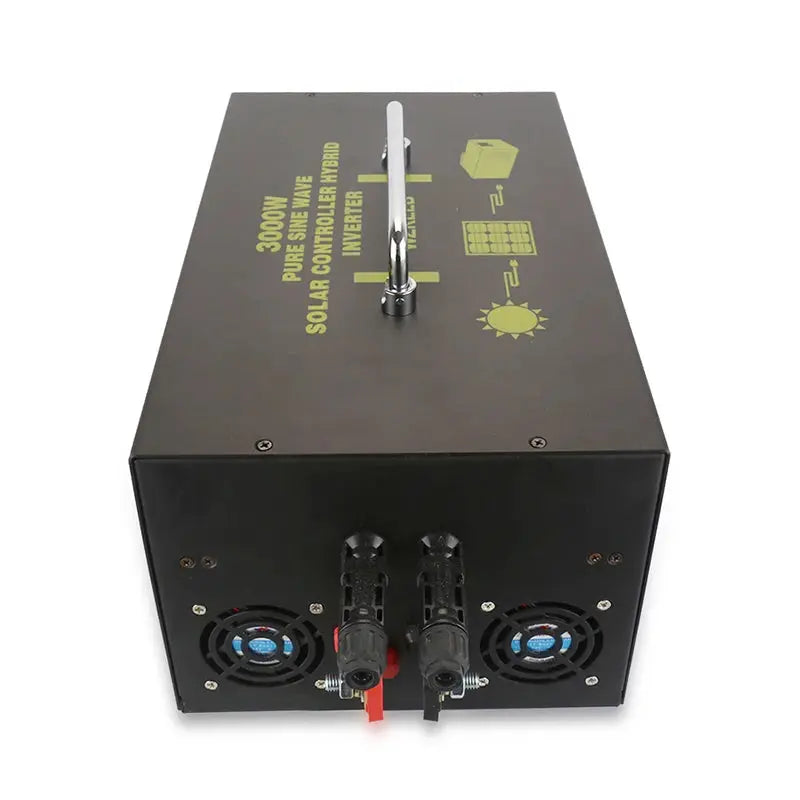
- Built-in 30A solar controller — connect a PV array directly, no separate charge controller needed for systems up to about 400W (12V) or 800W (24V).
- Nine protection layers — short circuit, overload, over/under voltage, over temperature, surge, over current, reverse polarity, fuse and low-voltage alarm.
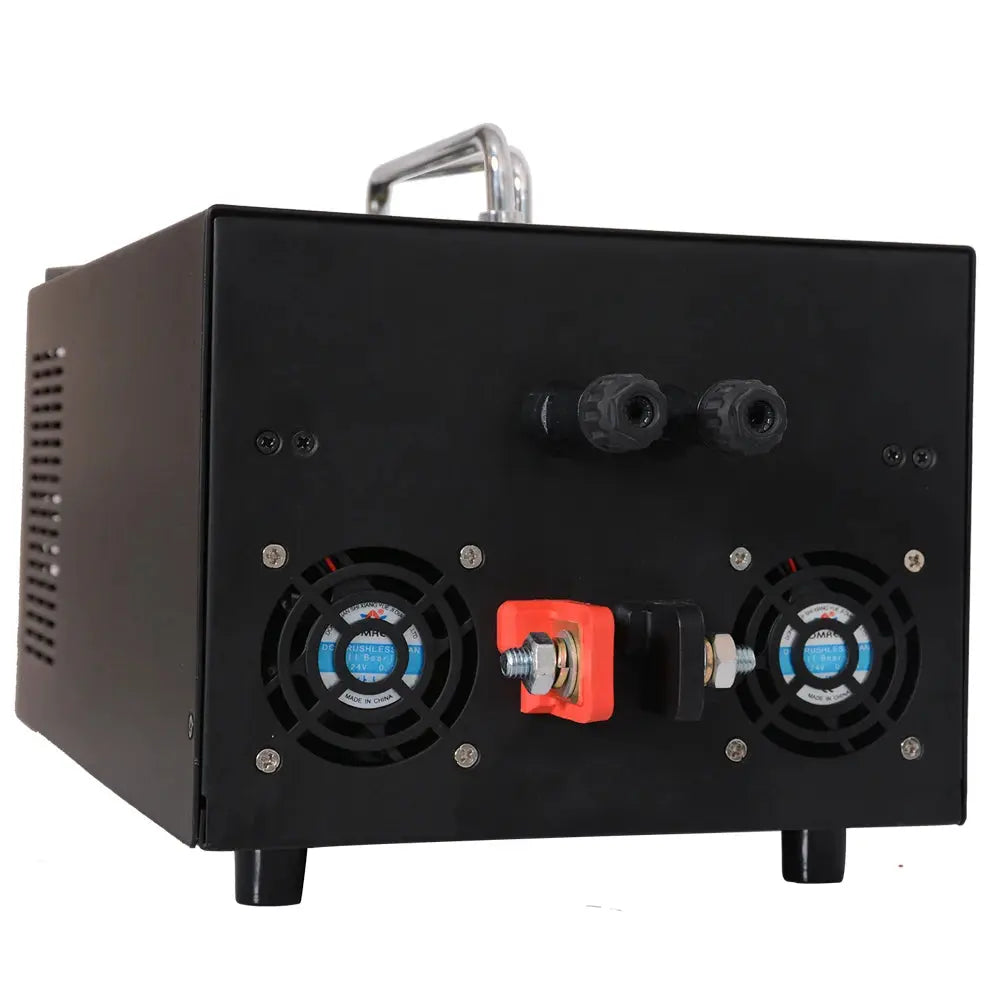
- Efficiency above 90% with soft start and temperature-controlled cooling fan.
Technical specifications
| Continuous power | 3000 W |
|---|---|
| Surge power | 6000 W |
| Waveform | Pure sine wave, THD < 5% |
| DC input | 12 V / 24 V / 48 V (select one) |
| Input range | 10-15 VDC / 21-30 VDC / 42-60 VDC |
| AC output | 110 / 120 / 220 / 230 / 240 VAC (select one) |
| Frequency | 50 Hz or 60 Hz |
| Efficiency | > 90% |
| No-load draw | < 1 A |
| AC regulation | ±3% |
| Solar controller | 30 A PWM, 12/24 V auto, PV open circuit ≤ 50 V |
| Float voltage | 13.8 V / 27.6 V |
| Cooling | Temperature-controlled fan |
| Operating temperature | -10 °C to +50 °C |
| Enclosure | Steel, 350 × 240 × 220 mm |
| Net weight | 6.5 kg |
| Certification | CE |
What's in the box
- 1 × 3000W pure sine wave inverter with integrated 30A solar controller
- 1 × DC battery cable set with clamps
- 1 × user manual and wiring diagram
Battery bank, PV panels and DC breakers are not included.
How to size your system
- 12V input — simplest wiring, but a 3000W load draws roughly 300 A. Use only for short cable runs and intermittent loads.
- 24V input — the practical choice for cabins, RVs and workshops. Halves the current and the cable cost.
- 48V input — recommended for whole-home off-grid use and any run longer than 2 m. Lowest losses and thinnest cable.
For inductive loads (pumps, compressors, motors) allow 3 to 7 times the appliance rated power as surge headroom. For resistive loads (heaters, lighting, kettles) stay under 80% of continuous rating.
Typical applications
- Off-grid cabins, farms and remote monitoring stations
- Solar and wind hybrid battery systems
- RV, van, boat and overland power
- Backup power for freezers, routers, lighting and home office equipment
- Workshop tools and small pumps
Ordering, shipping and warranty
- Sold by: 54 Energy — fixed online pricing, no quotes or negotiation required.
- Payment: Stripe (credit card, debit card, Apple Pay) directly on this site.
- Delivery: 5 to 15 business days, shipped from partner warehouses in North America, Europe and Asia.
- Warranty: 1 year against manufacturing defects.
- Support: email support for sizing and wiring. On-site installation is not provided.
Frequently asked questions
What is the difference between pure sine wave and modified sine wave?
A pure sine wave reproduces the same smooth waveform as the utility grid. Modified sine wave is a stepped approximation that causes motors to run hot, dimmers to buzz and some electronics to refuse to start. Any appliance with a compressor, transformer or microprocessor should run on pure sine wave.
Can it run a refrigerator?
Yes. A domestic fridge typically draws 100-250 W while running and 600-1500 W for the first second when the compressor starts. The 6000 W surge rating covers that easily.
Do I still need a separate solar charge controller?
Not for small arrays. The built-in 30 A PWM controller accepts a panel string with open-circuit voltage up to 50 V, which covers roughly 400 W at 12 V or 800 W at 24 V. Larger arrays need an external MPPT controller.
Which DC input voltage should I order?
Match your existing battery bank. If you are building from scratch and expect to use the full 3000 W, choose 48 V — it draws a quarter of the current of a 12 V system and needs far thinner cable.
Is 50 Hz or 60 Hz the right choice?
Choose the frequency of your country's grid: 60 Hz for the USA, Canada and most of the Americas; 50 Hz for Europe, the UK, Africa, Australia and most of Asia.
Does it work as a UPS or grid-tie inverter?
No. This is an off-grid inverter. It does not export to the utility grid and does not include an automatic transfer switch.
How long will my battery last?
Divide usable battery capacity in watt-hours by your load. A 200 Ah 24 V lithium bank holds about 4800 Wh, so a continuous 500 W load runs for roughly 9 hours before recharge.