3000W Vertical Axis Wind Turbine 24V/48V | Maglev Generator, 1.5 m/s Start-up, MPPT Controller Option
3000W Vertical Axis Wind Turbine 24V/48V | Maglev Generator, 1.5 m/s Start-up, MPPT Controller Option
Couldn't load pickup availability
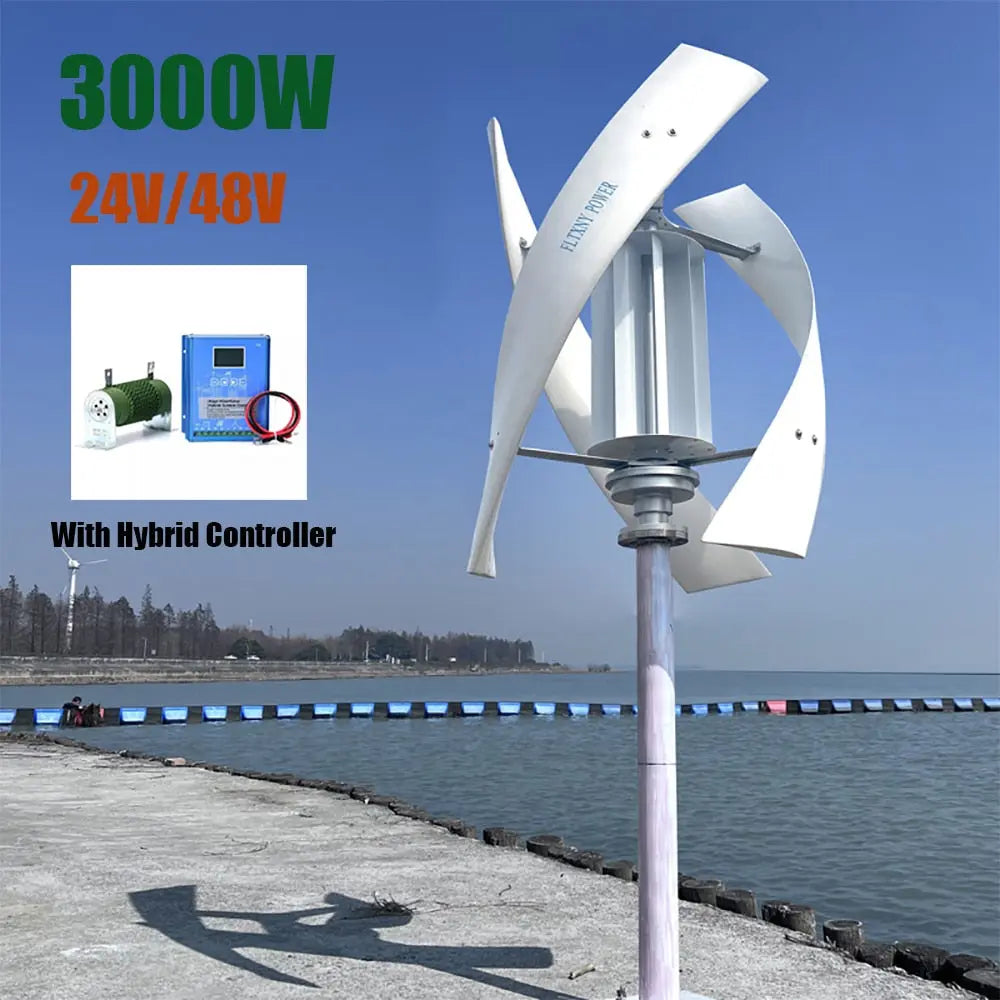
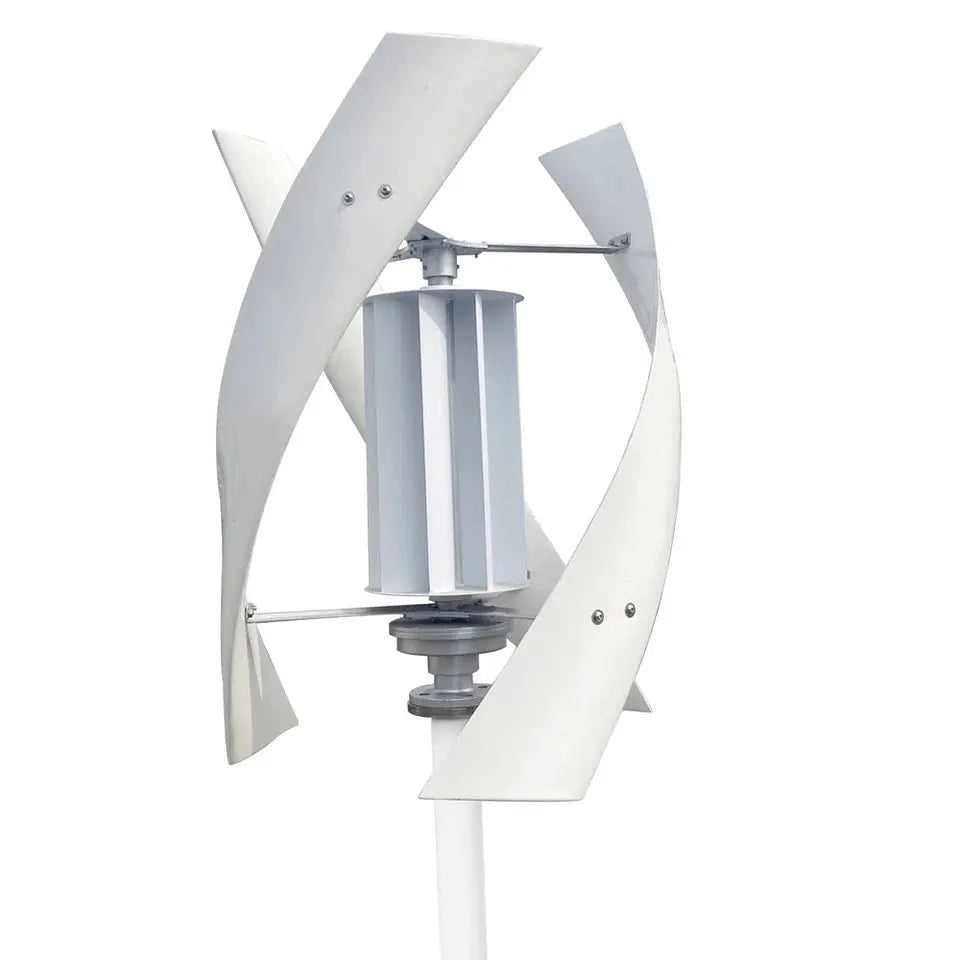
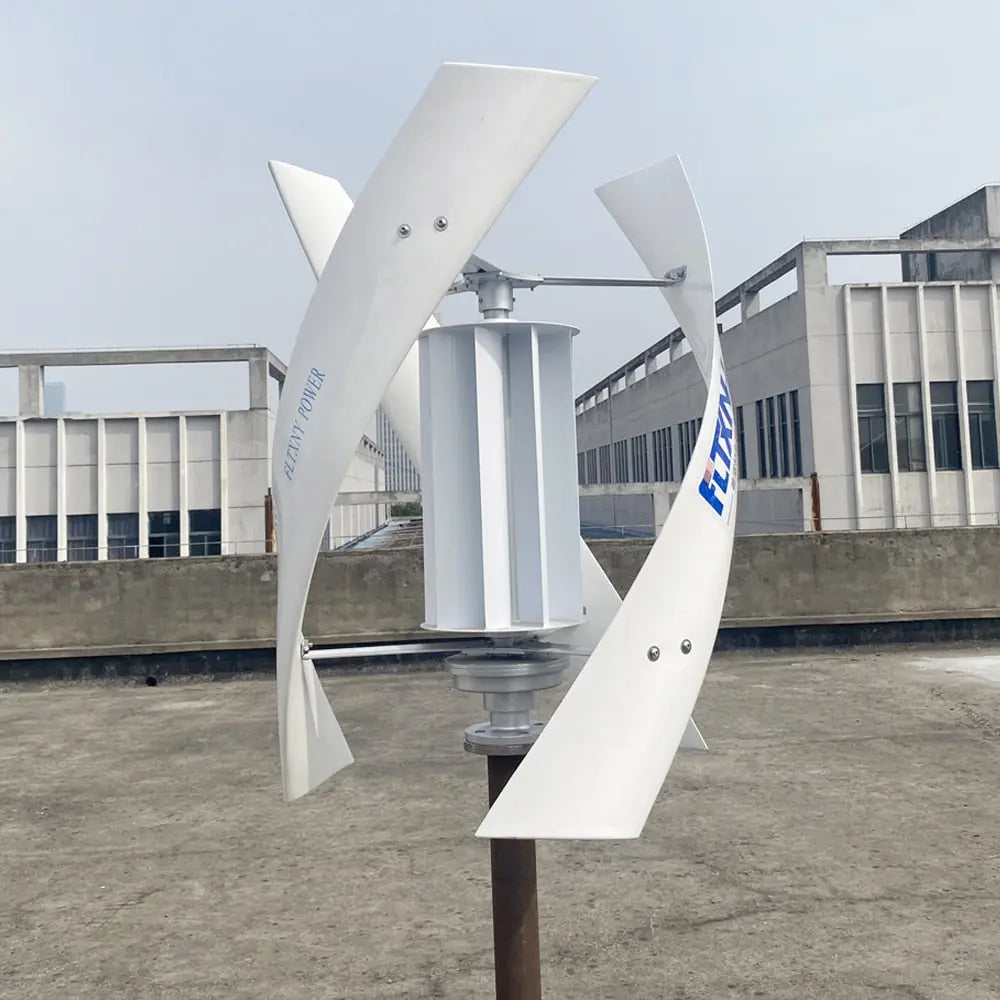
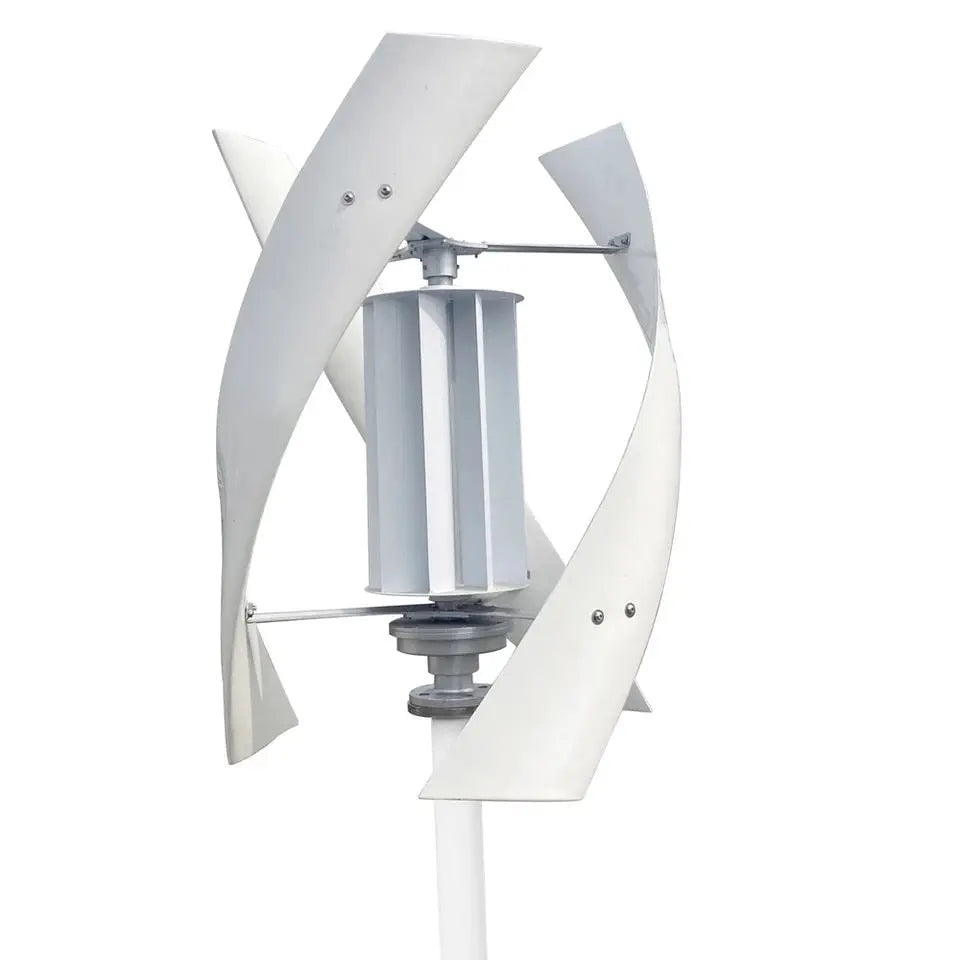
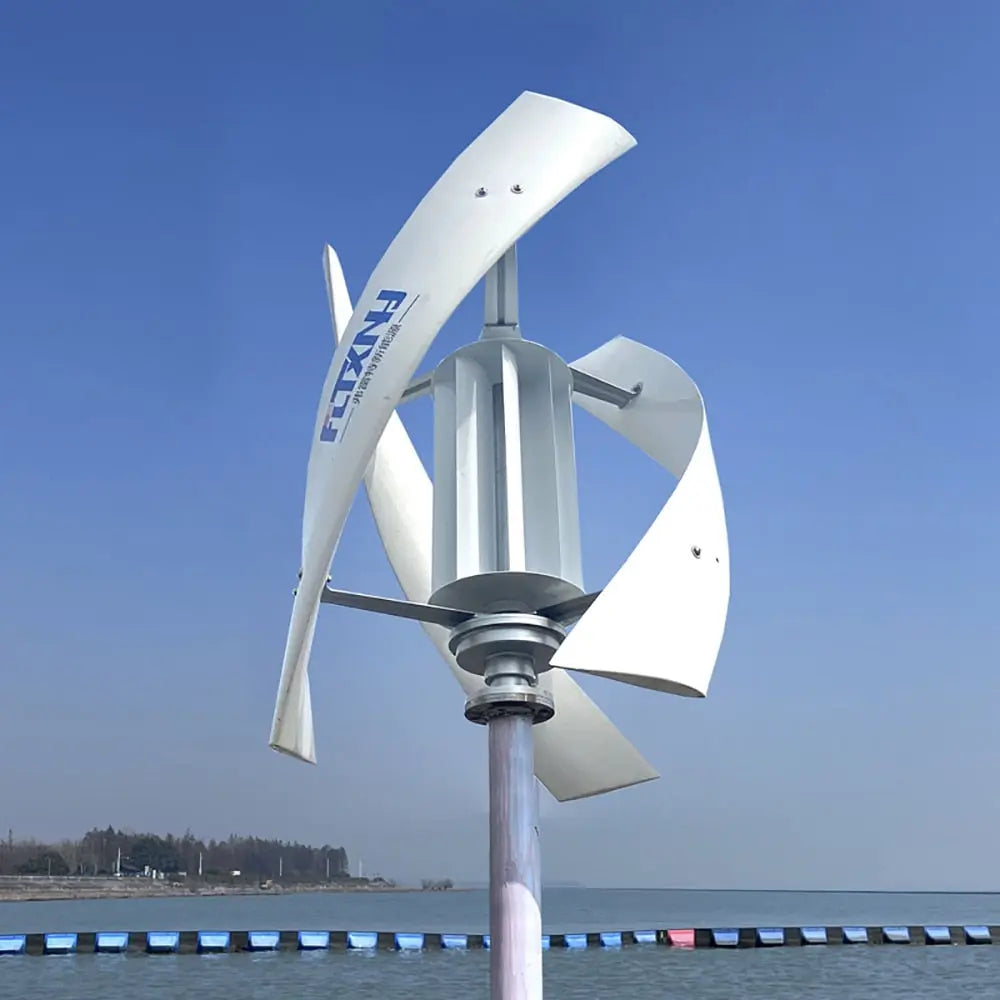
A 3000 W vertical axis wind turbine built around a permanent-magnet maglev generator that starts turning at 1.5 m/s. Because the rotor is vertical, it accepts wind from any direction without yawing — the reason vertical turbines outperform propeller designs on rooftops, in valleys and anywhere the wind shifts constantly.
Why a vertical maglev turbine
- 1.5 m/s start-up — the magnetic-suspension bearing removes almost all static friction, so the rotor begins generating in a breeze that leaves horizontal turbines stationary.
- Omnidirectional — no tail vane, no yaw mechanism, no wasted seconds turning into gusts.
- Low noise — precision-moulded glass-fibre blades running at low RPM keep it quiet enough for residential roofs.
- Survives 40 m/s — cast aluminium body with twin swivel bearings.
- Gearless 3-phase PMG — no gearbox to service, low cogging torque, long service life.
- Choose your kit — turbine only, turbine + MPPT controller, or turbine + hybrid controller for a combined wind-solar system.
Technical specifications
| Rated power | 3000 W |
|---|---|
| Rated voltage | 24 V / 48 V DC |
| Generator | 3-phase permanent magnet, magnetic suspension, gearless |
| Start-up wind speed | 1.5 m/s |
| Safe wind speed | 40 m/s maximum |
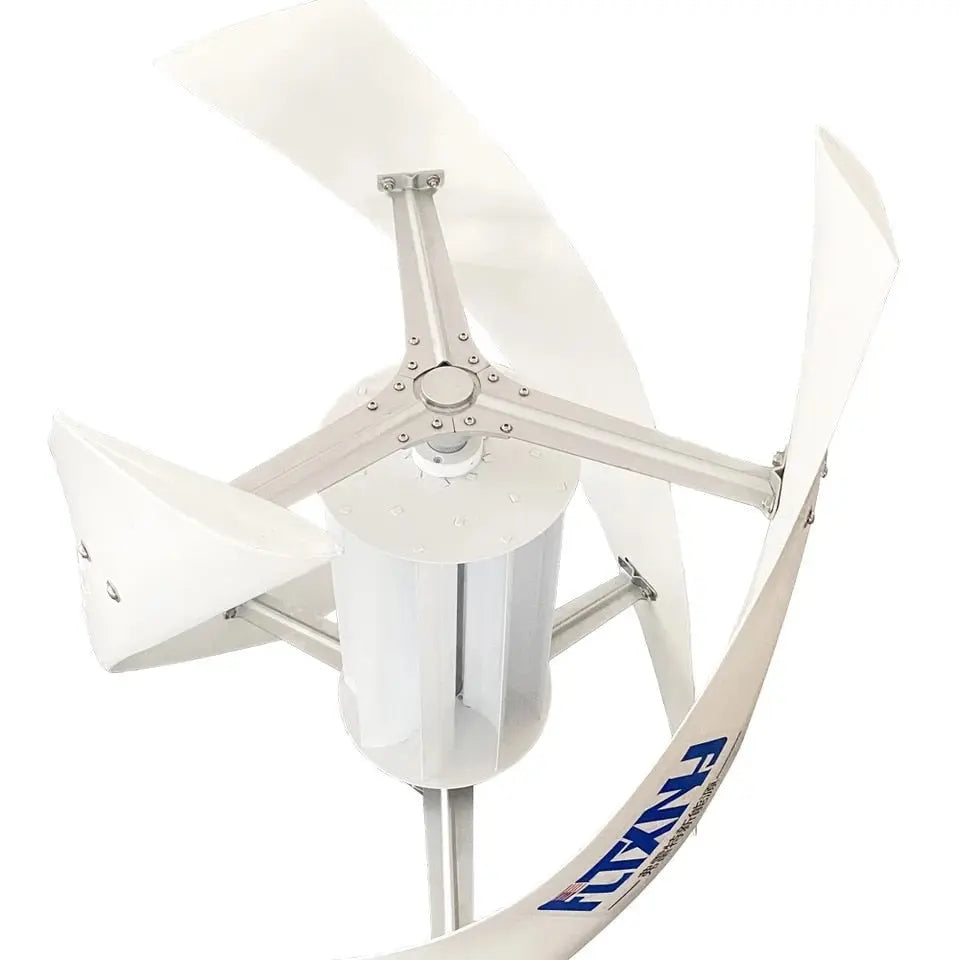
| Blades | 3 × glass fibre, precision injection moulded |
| Body | Cast aluminium alloy, 2 swivel bearings |
| Shaft | Iron |
| Mounting | Tube or flange connection |
| Controller (optional) | MPPT boost hybrid — up to 3300 W wind + 1500 W solar |
What's in the box
Turbine only: turbine set (hub, blades, generator, hood, bolts and nuts), installation tool set, flange.
With MPPT controller: everything above plus the MPPT charge controller.
With hybrid controller: everything above plus the wind-solar hybrid controller.
Mast or tower, battery bank and inverter are not included.
How to size and site it
- Voltage: 24 V suits cabins and mid-size battery banks; 48 V is the better choice for whole-home off-grid systems and any cable run over a few metres.
- Height matters more than power rating. Wind speed rises sharply with height and turbulence falls. Mount clear of rooflines, trees and parapets.
- Real output depends on your site. Rated power is reached at design wind speed; annual yield is driven by your location's average wind speed, not the nameplate figure. Check a local wind atlas before buying.
- Battery first. A wind turbine must always be connected to a battery bank through its controller — never run it open circuit.
Typical applications
- Off-grid homes, cabins and smallholdings
- Wind-solar hybrid systems for winter generation when solar output collapses
- Farms, workshops and remote monitoring sites
- Marine, boat and coastal installations
- Street and plaza lighting
Ordering, shipping and warranty
- Sold by: 54 Energy — transparent fixed pricing, no quotes required.
- Payment: Stripe (credit card, debit card, Apple Pay) on this site.
- Delivery: 5 to 15 business days from partner warehouses in North America, Europe and Asia.
- Warranty: 1 year against manufacturing defects.
- Support: email support for sizing and wiring diagrams. Installation and on-site consulting are not provided.
Frequently asked questions
Is a vertical axis turbine better than a horizontal one?
For turbulent, shifting wind — rooftops, built-up areas, valleys — yes, because it captures wind from any direction and starts at lower speed. For an open, exposed site with steady prevailing wind, a horizontal turbine of the same rating will usually produce more annual energy.
How much electricity will it actually produce?
That depends entirely on your average wind speed. Rated 3000 W output occurs at design wind speed; at a site averaging 5 m/s you should plan on a fraction of that as a daily average. Consult a wind map for your postcode before sizing your battery bank.
Is it noisy?
It runs at low RPM with moulded aerodynamic blades and a bearing that removes mechanical friction, so it is markedly quieter than a propeller turbine of similar output. Any turbine mounted rigidly to a building will transmit some vibration — use anti-vibration mounts on rooftops.
Do I need the MPPT controller?
Yes, a controller is mandatory. Choose the turbine-only option only if you already own a controller rated for 3000 W of wind input. The MPPT boost hybrid option also accepts up to 1500 W of solar.
Can I connect it directly to my house wiring or to the grid?
No. The turbine outputs 3-phase AC that must be rectified and regulated into a battery bank. To power household appliances add an inverter. Grid export requires a certified grid-tie inverter and approval from your network operator.
What maintenance does it need?
There is no gearbox and no lubrication schedule. Inspect blade bolts, mounting hardware and cable connections once or twice a year, and after any severe storm.
Will it survive a storm?
The structure is rated to 40 m/s. The controller applies electrical braking through the dump load when the battery is full or the rotor over-speeds.
Which voltage should I order, 24 V or 48 V?
Match your battery bank. If you are starting from scratch at 3000 W, choose 48 V — it halves the current, reduces cable losses and is the standard input for most off-grid inverters.