21W 28W Monocrystalline Foldable Solar Panel Charger Dual USB 5V 2A
21W 28W Monocrystalline Foldable Solar Panel Charger Dual USB 5V 2A
Couldn't load pickup availability
21W 28W Monocrystalline Foldable Solar Panel Charger Dual USB 5V 2A
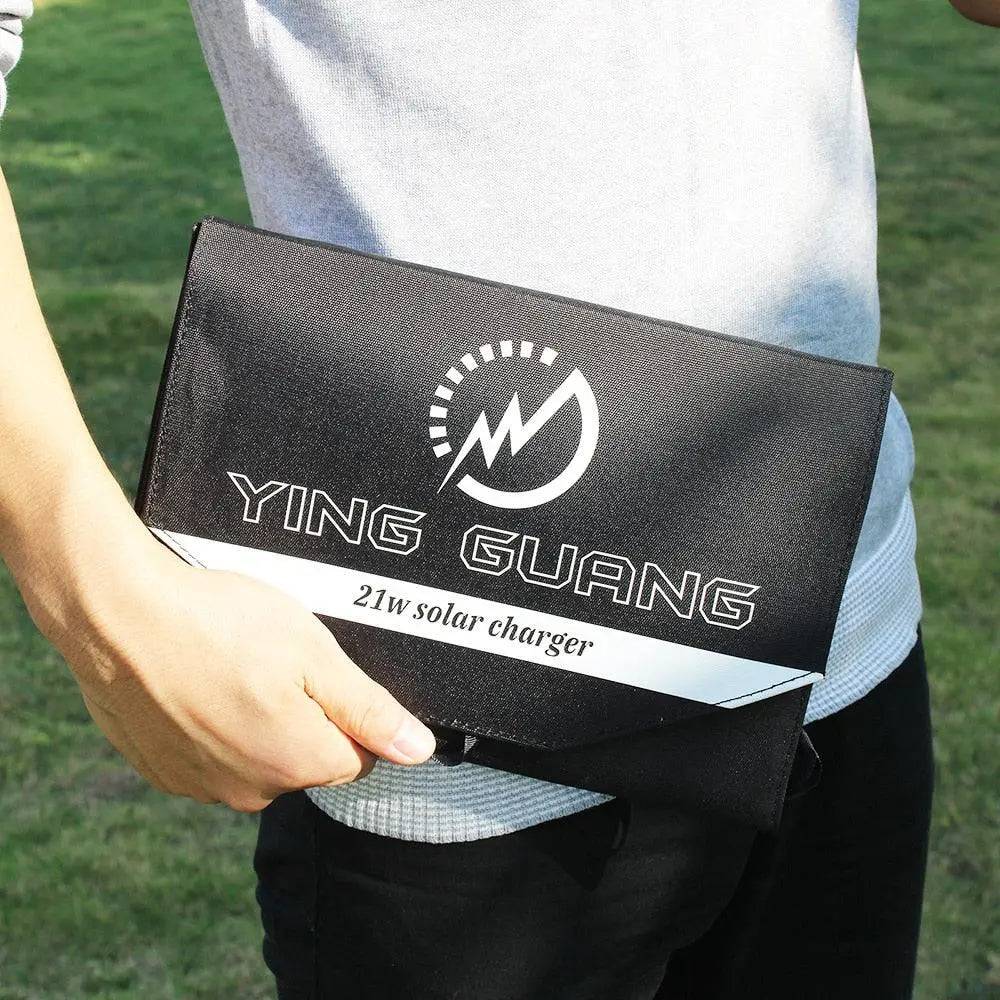
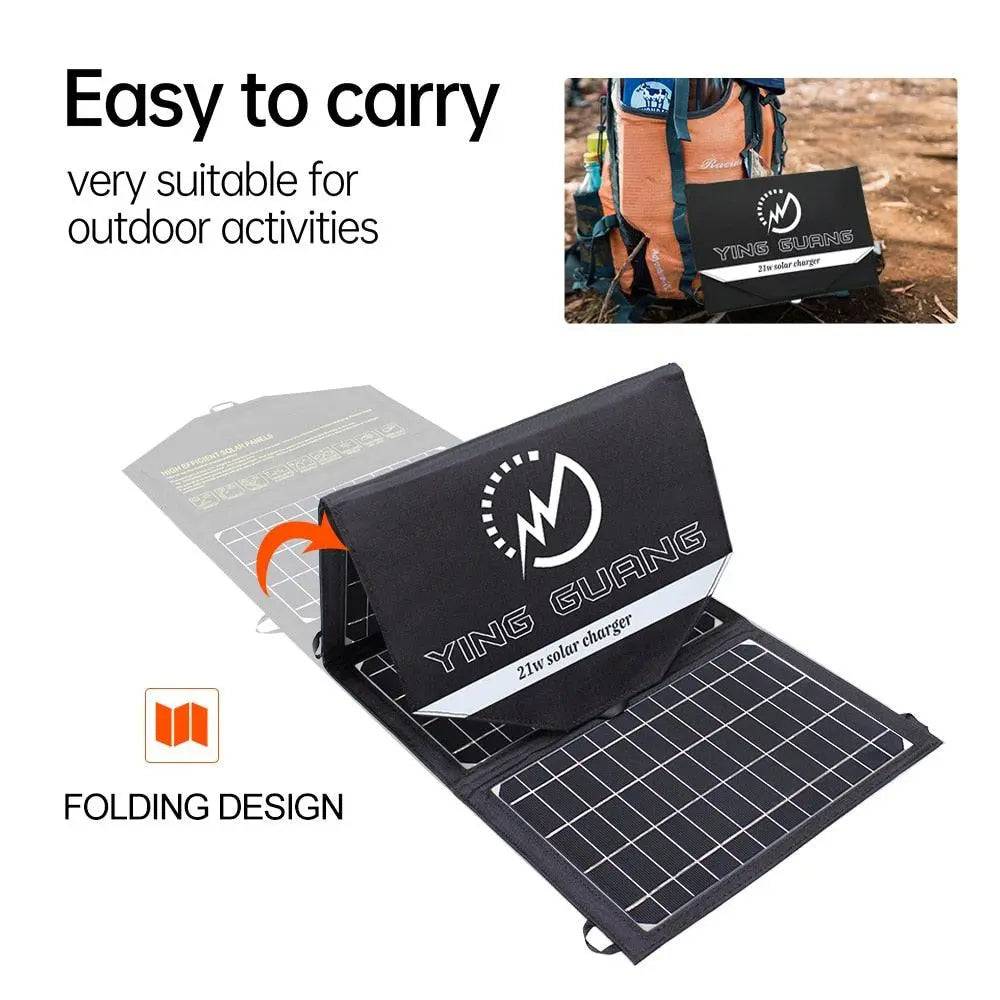
Professional-grade foldable solar charger with dual USB outputs delivers 21W or 28W peak power (model-dependent) for simultaneous device charging. Monocrystalline silicon cells achieve 22% conversion efficiency, charging smartphones, tablets, and power banks in outdoor environments. Folds to magazine size with integrated carabiners for backpack attachment.
⚡ Key Benefits
- ✅ Dual USB ports (5V/2A each) — charge two devices simultaneously
- ✅ 22% solar conversion efficiency — industry-leading monocrystalline cells
- ✅ Two power variants: 21W (3-panel) or 28W (4-panel) configurations
- ✅ Portable design — weighs 1.1 lbs (21W) or 1.43 lbs (28W), folds to 11" × 6"
- ✅ Weather-resistant construction — military-grade PET polymer surface
⚙️ Technical Specifications
| Parameter | 21W Model | 28W Model |
|---|---|---|
| Solar Power Rating | 21W (3 panels) | 28W (4 panels) |
| Cell Technology | Monocrystalline silicon | |
| Conversion Efficiency | 22% under STC (1000 W/m², 25°C, AM1.5) | |
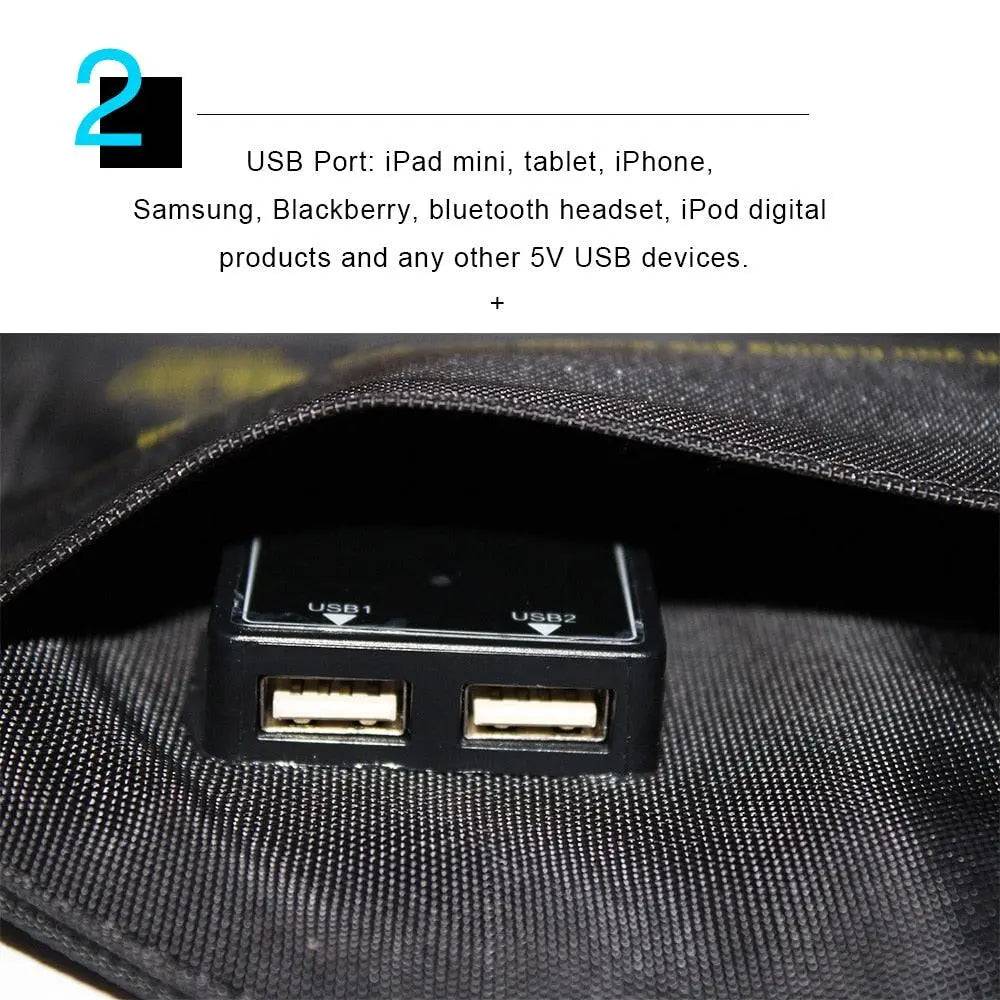
| USB Outputs | 2× USB Type-A ports (5V/2A each, 10W max per port) | |
| Maximum Combined Output | 2.1A at 5V (10.5W) | 2.8A at 5V (14W) |
| Folded Dimensions | 280 × 160 × 20 mm (11 × 6.3 × 0.8 inches) | 280 × 160 × 25 mm (11 × 6.3 × 1 inches) |
| Unfolded Dimensions | 670 × 280 mm (26.4 × 11 inches) | 840 × 280 mm (33 × 11 inches) |
| Weight | 0.5 kg (1.1 lbs) | 0.65 kg (1.43 lbs) |
| Panel Material | Industrial PET polymer (water-resistant) | |
| Operating Temperature | −20°C to +70°C (−4°F to 158°F) | |
| Certifications | CE, FCC, RoHS | |
| Package Contents | 1× Solar Panel Charger, 4× carabiners, 1× user manual, 1× USB-C cable | |
📱 Compatibility & Applications
Both 21W and 28W models support all 5V USB-charged devices:
- Smartphones: Apple iPhone (all models), Samsung Galaxy, Google Pixel, OnePlus, Xiaomi, Huawei
- Tablets: iPad (USB-A to Lightning/USB-C cable required), Android tablets, e-readers (Kindle, Kobo)
- Power banks: Anker, RAVPower, Goal Zero, and all 5V-input portable chargers
- Wearables: Apple Watch (with USB adapter), Garmin smartwatches, Fitbit trackers
- Cameras: GoPro, DJI Osmo, Canon/Nikon battery chargers (USB-powered models)
- Other: Bluetooth speakers, headphones, GPS units, emergency radios
Not compatible with: Laptops, high-wattage tablets (>10W), devices requiring >5V input (USB-PD), proprietary charging protocols (OnePlus Dash Charge, Huawei SuperCharge).
🔋 Performance Comparison: 21W vs 28W
21W Model: Ideal for 1-2 device charging. Charges an iPhone 14 (3279 mAh) in approximately 2.5-3 hours under full sun. Compact 3-panel design preferred by ultralight backpackers and minimalist travelers. Real-world output: 12-18W in bright sunlight.
28W Model: Optimized for 2-device simultaneous charging or faster single-device charging. Charges the same iPhone 14 in approximately 2 hours. 4-panel configuration delivers 33% more power than 21W model. Real-world output: 18-24W in bright sunlight. Recommended for group camping, RV owners, or emergency kits.
🌞 How to Use Your Solar Charger
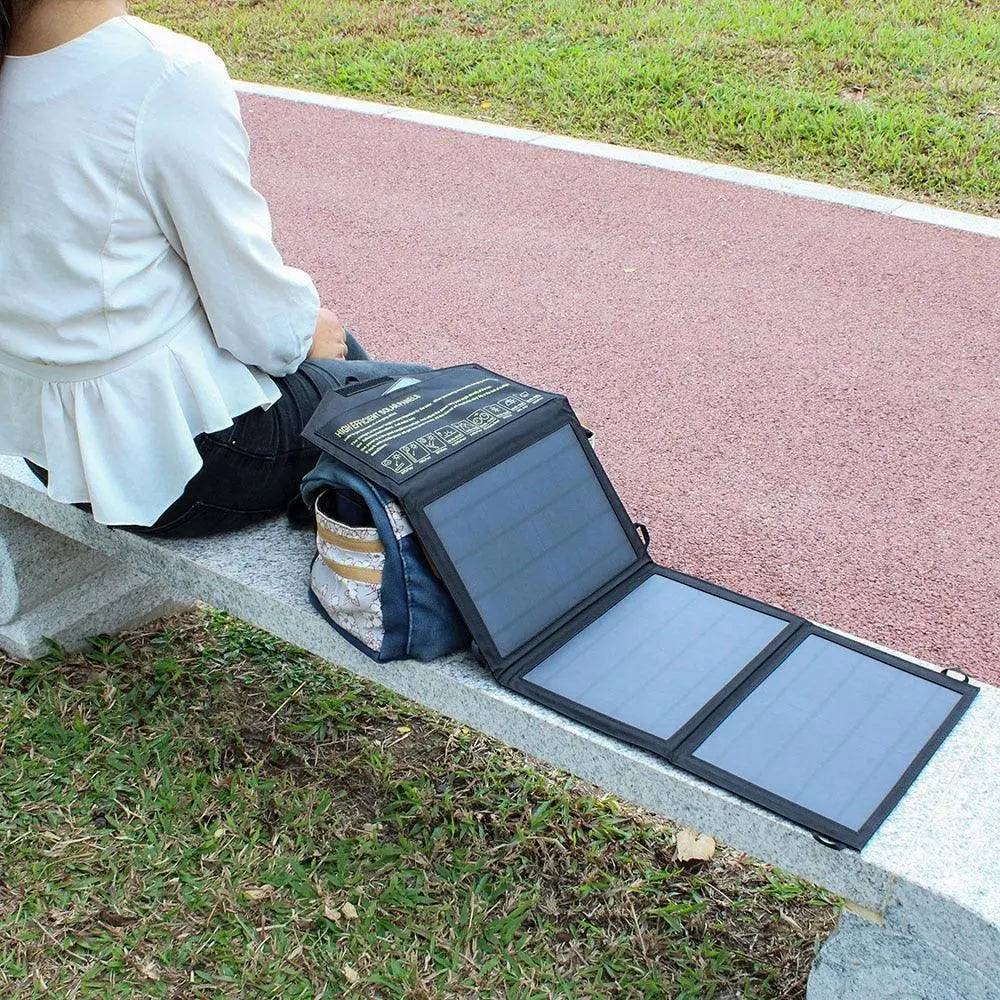
Setup: Unfold all panels completely. Lay flat on a surface perpendicular to the sun (approximately 45° angle for maximum efficiency). Attach carabiners to a backpack, tent pole, or tree branch if charging while hiking. Connect devices to USB ports.
LED Indicators: Both USB ports have built-in LED indicators. Solid green light confirms active charging. Flickering or no light indicates insufficient sunlight or device incompatibility.
Charging Time Estimates: Under bright sunlight (1000 W/m²), typical devices require: iPhone 14 (3279 mAh) = 2-3 hours (21W) or 1.5-2 hours (28W); Samsung Galaxy S23 (3900 mAh) = 2.5-3.5 hours (21W) or 2-2.5 hours (28W); 10,000 mAh power bank = 6-8 hours (21W) or 4-6 hours (28W). Cloudy conditions increase times by 50-100%.
Maintenance: Wipe panels with a damp cloth weekly to remove dust and debris. Avoid abrasive cleaners. Store in a dry location when not in use. Do not expose to extreme heat (>70°C) or submerge in water.
🏕️ Outdoor & Emergency Use Cases
Backpackers use the 21W model for multi-day treks where weight matters. Car campers and RV owners prefer the 28W model for extended stays off-grid. Emergency preparedness kits include either model as a reliable backup power source during blackouts or natural disasters. Festival-goers rely on solar chargers to stay connected without access to wall outlets. Digital nomads working from remote locations use solar panels to extend laptop battery life via USB power banks.
⚡ Energy Output & Efficiency
Monocrystalline cells convert 22% of incoming solar radiation into electricity—among the highest efficiency rates for portable panels. Under standard test conditions (STC: 1000 W/m², 25°C, AM1.5 spectrum), the 21W model generates 21 watts peak power; the 28W model generates 28 watts. Real-world conditions (clouds, angle, temperature) reduce output to 60-85% of rated capacity. Both models include intelligent voltage regulation to prevent overcharging and optimize power delivery.
❓ Frequently Asked Questions
1. Can I charge my laptop with this solar panel?
No. Both models output 5V DC via USB, which is insufficient for most laptops (typically require 15-20V via USB-C PD). You can charge a laptop indirectly by first charging a high-capacity USB-C PD power bank (20,000+ mAh), then using that power bank to charge your laptop.
2. What happens if I connect a device that draws more than 2A per port?
The integrated circuit controller limits output to 2A per port (10W). Devices requesting higher current (e.g., fast-charging smartphones at 3A) will charge at the standard 2A rate. The panel will not be damaged.
3. Can I use this charger in the rain?
The PET polymer surface is water-resistant and can tolerate light rain or drizzle. Do not intentionally submerge the unit or expose USB ports to water. Cover ports with included dust caps during wet conditions. Dry completely before storage.
4. How long will this solar charger last?
Monocrystalline solar cells have a typical lifespan of 20-25 years with gradual efficiency degradation (0.5% per year). The electronic components (voltage regulators, USB ports) have a shorter lifespan of 5-10 years depending on usage. All products include a 12-month manufacturer warranty.
5. Is the 28W model worth the extra cost over the 21W?
If you frequently charge 2+ devices simultaneously or need faster charging times, the 28W model provides better value. For solo backpackers prioritizing weight and pack size, the 21W model is sufficient. Price difference is typically USD 10-15.
6. Can I request a quote or estimate?
No quote is necessary. You can purchase this product directly through our website with transparent pricing and no hidden fees.
📦 Shipping & Delivery
This product ships from warehouses in North America, Europe, or Asia depending on your location, with typical delivery of 7-15 business days. International orders are processed through standard postal services with full tracking. Expedited shipping is not available for this item.
🛡️ Why Trust Us
We have served renewable energy enthusiasts, outdoor professionals, and disaster preparedness planners for over 8 years, maintaining a 98% positive customer rating across 15+ countries. Our technical team personally tests every solar charger batch before shipment. We guarantee a 30-day full refund if this charger does not meet your expectations, no questions asked.
Product Images